
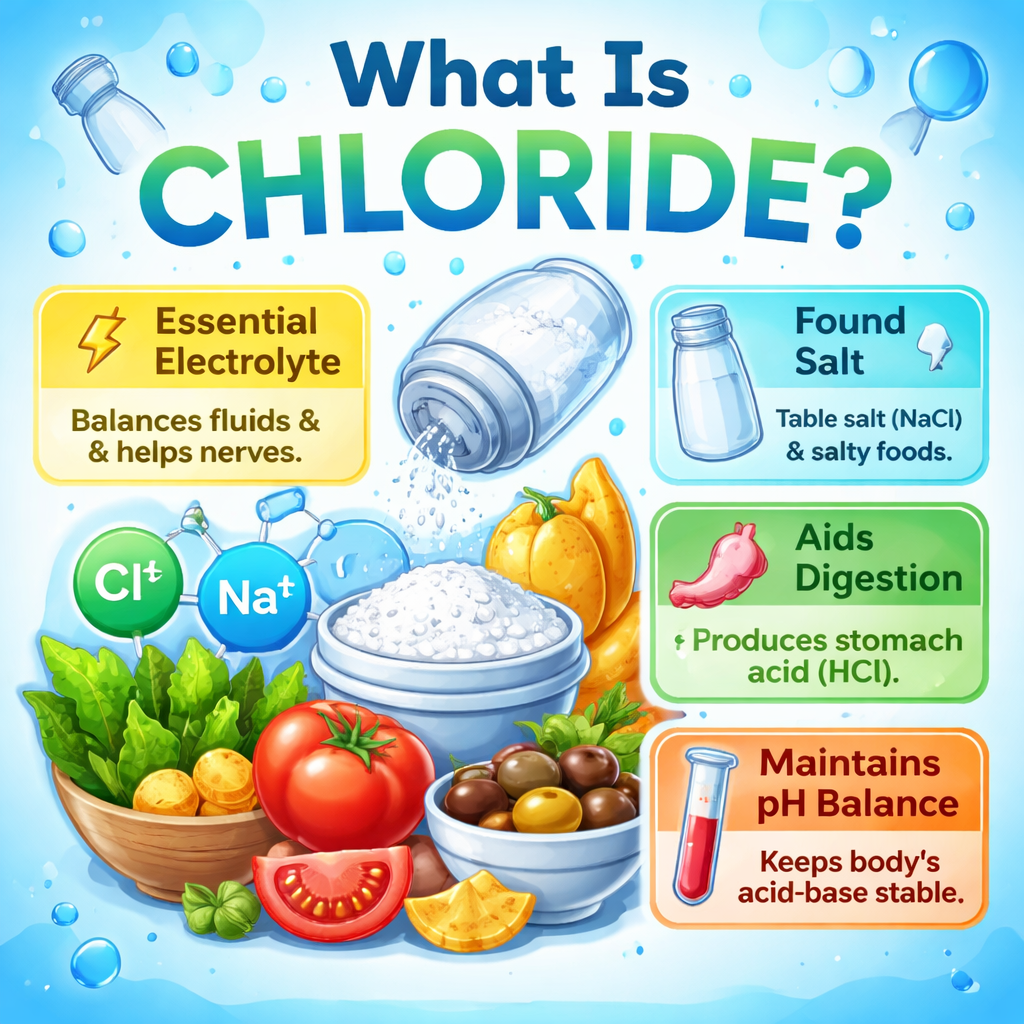
Chloride is an essential electrolyte mineral that helps keep your body functioning properly. It carries an electrical charge and works alongside other electrolytes like sodium and potassium to maintain fluid balance, nerve signaling, and muscle function.
Most people know chloride in its common form: table salt, or Sodium chloride. When salt dissolves in water, it separates into sodium and chloride ions — both vital for your health.
⚡ Why Is Chloride Important?
Chloride plays several crucial roles in the body:
1. Maintains Fluid Balance
Chloride helps regulate how much fluid stays inside and outside your cells. It works closely with sodium to prevent dehydration or fluid overload.
2. Supports Nerve and Muscle Function
Like other electrolytes, chloride helps transmit electrical impulses. These signals allow your muscles to contract and your nerves to communicate properly.
3. Aids Digestion
Chloride is a key component of hydrochloric acid (HCl) in your stomach. This acid helps:
-
Break down food
-
Activate digestive enzymes
-
Kill harmful bacteria
Without adequate chloride, digestion becomes less efficient.
4. Maintains pH Balance
Your body must maintain a stable acid-base balance. Chloride helps regulate blood pH levels, preventing the body from becoming too acidic or too alkaline.
Most people get chloride from salt-containing foods. Common sources include:
-
Table salt
-
Processed foods
-
Seaweed
-
Tomatoes
-
Lettuce
-
Olives
Because chloride is abundant in the modern diet, deficiency is rare in healthy individuals.


Dejar un comentario
Este sitio está protegido por hCaptcha y se aplican la Política de privacidad de hCaptcha y los Términos del servicio.