
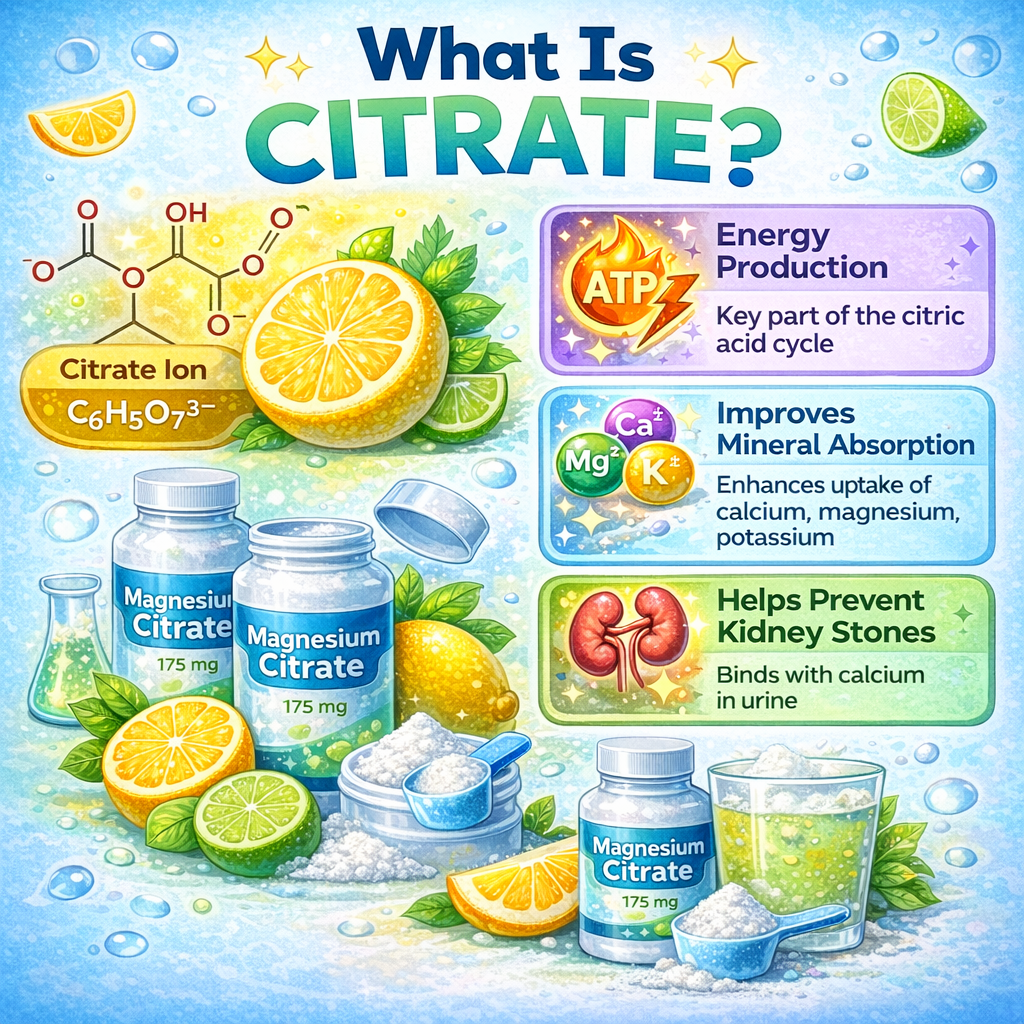
Citrate is the negatively charged form of citric acid, a natural compound found in citrus fruits like lemons and oranges. In the body, citrate plays a crucial role in energy production, mineral absorption, and acid-base balance.
Chemically, citrate is derived from Citric acid. When citric acid loses hydrogen ions, it becomes citrate — the active form that participates in many biological processes.
⚡ Why Is Citrate Important?
1. Essential for Energy Production
Citrate is a key player in the Citric acid cycle (also called the Krebs cycle).
This cycle:
-
Converts carbohydrates, fats, and proteins into usable energy (ATP)
-
Occurs inside the mitochondria
-
Keeps your cells functioning efficiently
Without citrate, your cells couldn’t efficiently produce energy.
2. Supports Mineral Absorption
Citrate binds to minerals such as:
-
Calcium
-
Magnesium
-
Potassium
This improves their absorption in the digestive tract. That’s why supplements like magnesium citrate are commonly used — citrate makes minerals more bioavailable.
3. Helps Prevent Kidney Stones
Citrate can bind with calcium in urine, helping prevent the formation of certain types of kidney stones.
Low urinary citrate levels are associated with a higher risk of calcium-based kidney stones.
4. Maintains Acid-Base Balance
Citrate helps regulate pH in the body. When metabolized, it produces bicarbonate, which can help reduce acidity in blood and urine.
Where Do You Get Citrate?
Natural sources include:
-
Lemons
-
Limes
-
Oranges
-
Grapefruit
-
Other citrus fruits
Citrate is also found in:
-
Electrolyte drinks
-
Mineral supplements (magnesium citrate, potassium citrate)
📊 Is Citrate an Electrolyte?
Citrate itself is not typically classified as a primary electrolyte like sodium or chloride. However, it carries a negative charge and interacts closely with electrolyte minerals.



Dejar un comentario
Este sitio está protegido por hCaptcha y se aplican la Política de privacidad de hCaptcha y los Términos del servicio.